
MiraLAX for Constipation Support
Why constipation can happen during GLP-1 therapy—and how this osmotic laxative may help.
Best for
- People who want to understand occasional constipation support during GLP-1 therapy
Why constipation can happen during GLP-1 therapy
Semaglutide and tirzepatide delay gastric emptying—the movement of food from the stomach into the small intestine. That slower stomach emptying can contribute to digestive symptoms, but constipation is not always explained by the stomach alone.
Constipation can have more than one cause. During treatment, appetite, meal size, fluid intake, fiber intake, and activity may change. Farther along the digestive tract, the colon absorbs water from waste. When stool moves slowly or loses too much water, it can become hard, dry, and difficult to pass.
How polyethylene glycol 3350 works
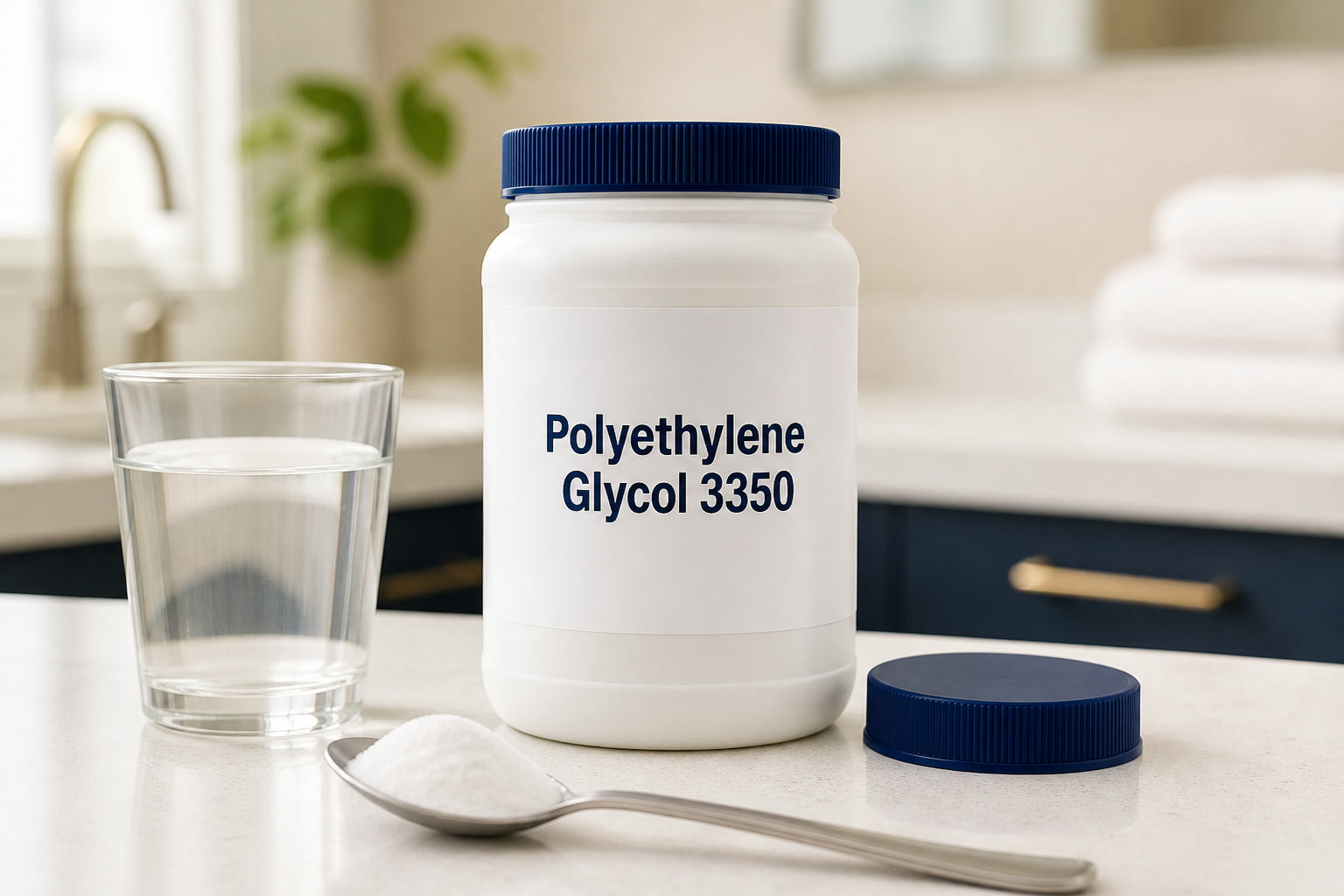
MiraLAX and generic equivalents contain polyethylene glycol 3350, an osmotic laxative. It works by retaining water in the stool. The added water softens the stool and can increase the frequency of bowel movements, which may make it easier to go and support more regular bowel movements.
It does not reverse the medication’s effect on gastric emptying and it does not work instantly. Its role is to change the amount of water in the stool so the stool is easier to pass.
What to expect
- The over-the-counter label says it generally produces a bowel movement in 1 to 3 days.
- Loose, watery, or more frequent stools can occur.
- Use it only as directed on the product label and by your medical care team.
- If you have kidney disease, ask a doctor before use.

Supporting regularity
Adequate fluid intake, appropriate fiber, and regular movement can also support bowel regularity. Follow any fluid, diet, or activity limits your medical care team has given you, and ask before making a major change if you have another medical condition.
Constipation is often easier to address early. Let your care team know if your usual pattern changes or symptoms are not improving rather than repeatedly adding products on your own.
When to contact your care team
- Contact your care team if constipation is not improving, you need a laxative for longer than 1 week, or you develop worsening nausea, bloating, cramping, abdominal pain, or diarrhea.
- Seek medical care promptly for rectal bleeding or blood in the stool, constant abdominal pain, inability to pass gas, vomiting, fever, or unintentional weight loss.
The key distinction
Delayed stomach emptying can be one contributor to constipation during GLP-1 therapy. Polyethylene glycol 3350 does not speed the stomach back up; it helps by retaining water in the stool so bowel movements may be softer, easier to pass, and more regular.
Educational only — always discuss medication choices with your care team.