
How GLP-1 Medications Work
Getting Started
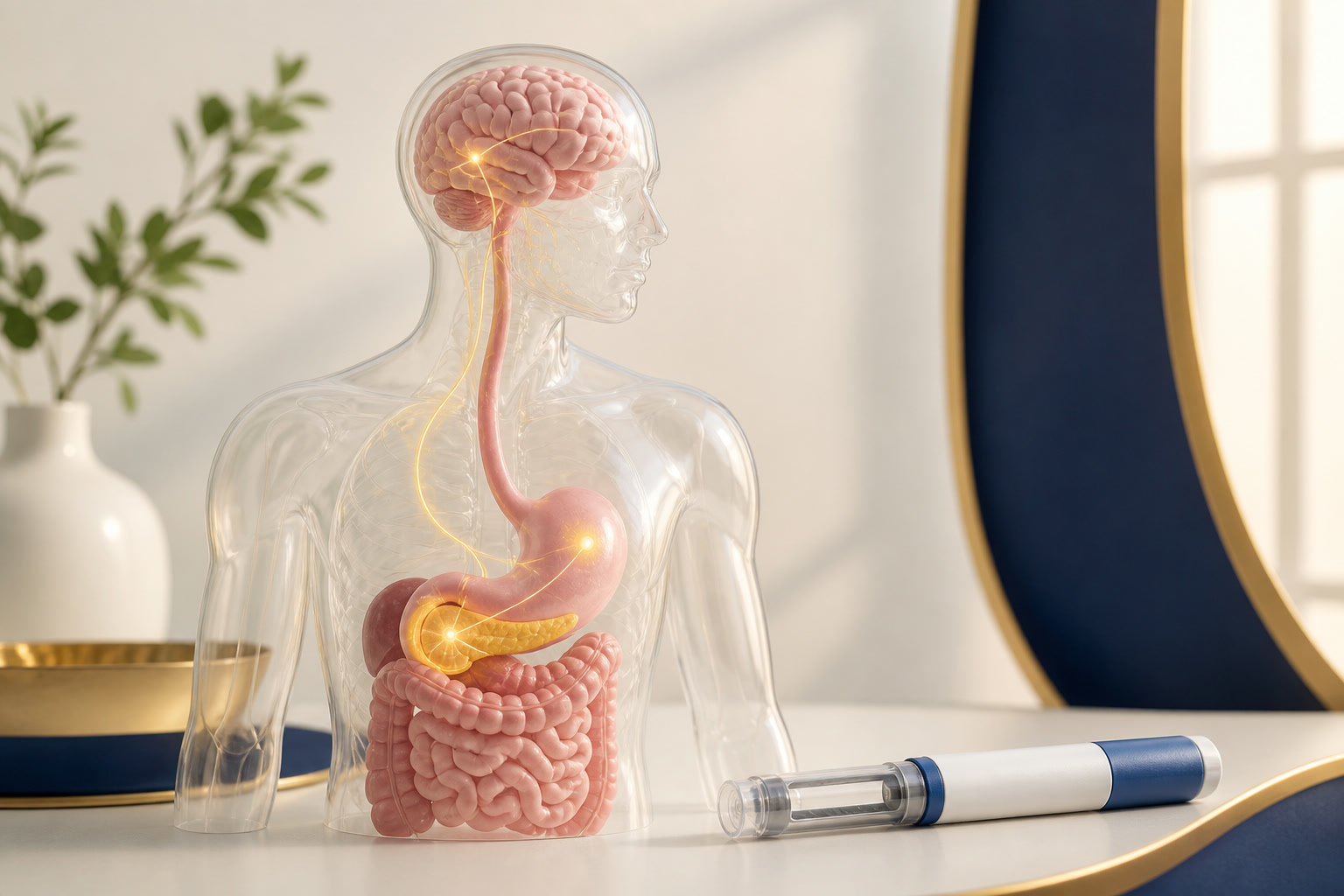
GLP-1 receptor agonists mimic a natural hormone (glucagon-like peptide-1) that your gut releases after you eat. This hormone signals to your brain that you are full, slows the movement of food through your stomach (gastric emptying), and helps regulate blood sugar.
How it works in practice: When gastric emptying slows, you feel satisfied with smaller portions and stay full longer. Appetite decreases naturally — not through willpower alone.
Why side effects happen: Because gastric emptying is slower, nausea and constipation are direct results of how the medication works. They are not signs that something is wrong — they are signs the medication is doing its job. Most side effects improve significantly as your body adjusts, typically within 2–4 weeks of each dose change.

Key takeaways:
- Slowed gastric emptying is the core mechanism
- Side effects usually improve with time and dose adjustment
- Dose timing and food choices can reduce side effects
- All medication decisions are made by your PSPB clinical team
Educational only — always discuss medication choices with your care team.